



Cannabinoid Receptor
Cannabinoid Receptor
Cannabinoid receptors are currently classified into three groups: central (CB1), peripheral (CB2) and GPR55, all of which are G-protein-coupled. CB1 receptors are primarily located at central and peripheral nerve terminals. CB2 receptors are predominantly expressed in non-neuronal tissues, particularly immune cells, where they modulate cytokine release and cell migration. Recent reports have suggested that CB2 receptors may also be expressed in the CNS. GPR55 receptors are non-CB1/CB2 receptors that exhibit affinity for endogenous, plant and synthetic cannabinoids. Endogenous ligands for cannabinoid receptors have been discovered, including anandamide and 2-arachidonylglycerol.
Cannabinoid Receptor Isoform Specific Products
All Product Categories
-
Cannabinoid Receptor Inhibitors
(37)
View all products
-
Cannabinoid Receptor Agonists
(141)
View all products
-
Cannabinoid Receptor Antagonists
(76)
View all products
-
Cannabinoid Receptor Activators
(14)
View all products
-
Cannabinoid Receptor Modulators
(24)
View all products
-
Cannabinoid Receptor Chemical
(1)
View all products
-
Cannabinoid Receptor Inducer
(1)
View all products
-
Cannabinoid Receptor Degrader
(1)
View all products
-
Cannabinoid Receptor Controls
(2)
View all products
-
Cannabinoid Receptor Ligands
(13)
View all products
-
Cannabinoid Receptor Related Products (448)
Related Products (448)

-
Antibodies (1)
-
Cannabinoid Receptor Isoform Comparison
-
CB2R agonist 3
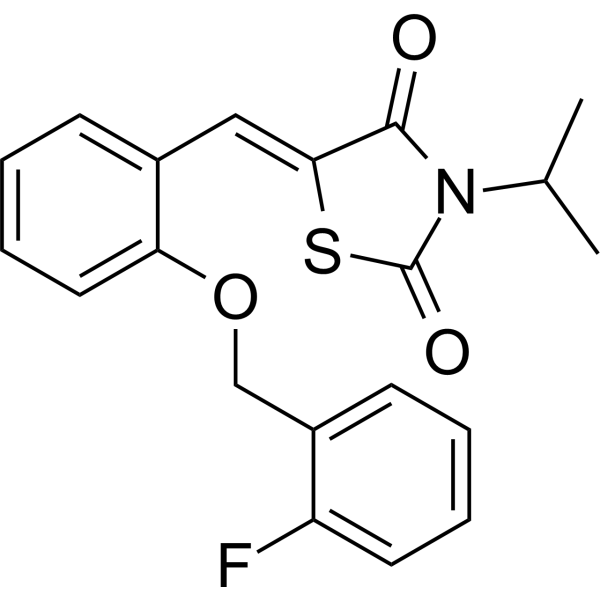 0 ImagesCat. No.: HY-149644CAS No.: 444331-43-5CB2R agonist 3 is an agonist of cannabinoid receptor 2 (CB2R), with EC50 of 0.37μM that plays an important role in immune system.
-
HU 433
 0 ImagesCat. No.: HY-W751734CAS No.: 1220887-84-2
-
JTE 7-31
 0 ImagesCat. No.: HY-122281CAS No.: 194358-72-0JTE 7-31 selectively acts on peripheral cannabinoid receptors, minimizing central nervous system side effects. They exhibit potent immunomodulatory, anti-inflammatory and anti-allergic properties, as well as inhibitory effects on nephritis.
-
EGFR-IN-178
 0 ImagesCat. No.: HY-178448EGFR-IN-178 is an orally active EGFR mutant inhibitor, exhibits highly selective inhibitory activity against mutants of the EGFR enzyme, including Del19 (IC50 = 3.4 nM), L858R/T790 M (IC50 = 2.9 nM), and Del19/T790 M (IC50 = 2.5 nM). EGFR-IN-178 has good activity against JAK2 (IC50 = 55.6 nM) and JAK3 (IC50 = 46.1 nM) kinases. EGFR-IN-178 can increase cellular lipid oxide MDA, meanwhile decrease GSH content, causing ferroptosis in cancer cells. EGFR-IN-178 promotes apoptosis by increasing cleaved caspase-3 expression. EGFR-IN-178 can inhibit the phosphorylation of EGFR protein and decrease the active form p-JAK2 for JAK2, induce an increase in intracellular ROS. EGFR-IN-178 can be used for the study of non-small cell lung cancer (NSCLC).
-
CB2 receptor antagonist 5
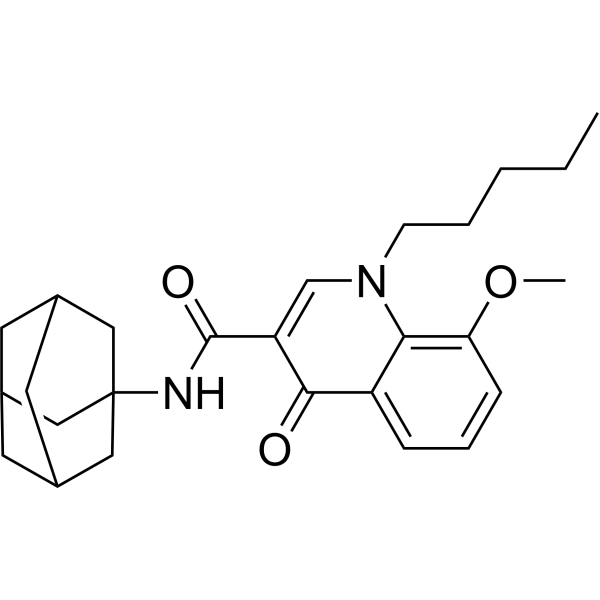 0 ImagesCat. No.: HY-116380CAS No.: 1314230-69-7
-
CB2 receptor agonist 7
 0 ImagesCat. No.: HY-14160CAS No.: 871819-90-8

-
AM404-d4
 0 ImagesCat. No.: HY-W777527CAS No.: 1185244-71-6AM404-d4 is the deuterium labeled AM404 (HY-101388). AM404, an inhibitor of endocannabinoid reuptake, blocks anandamide transport with IC50 values in the low micromolar range. AM404 is able to relax rat isolated hepatic arteries contracted with Phenylephrine, with a pEC50 value of 7.4 (corresponding to an EC50 of 0.04 μM). Neuroprotective Effect.

-
SMM-189
 0 ImagesCat. No.: HY-100778CAS No.: 1054451-07-8SMM-189 is a potent and selective cannabinoid receptor 2 (CB2) inverse agonist. SMM-189 plays an important role in neurodegenerative disorders and traumatic brain injury research.
-
ISAM-CG557
 0 ImagesCat. No.: HY-175666ISAM-CG557 is a selective CB2R agonist, with a Ki of 54.6 nM. ISAM-CG557 reduces intracellular ROS levels and caspase activity. ISAM-CG557 exhibits significant MAPK bias and moderate G-protein bias, with CB2R EC50s of 0.60 nM (cAMP), 60.9 nM (β-arrestin) and 0.03 nM (MAPK). ISAM-CG557 exerts potent anti-inflammatory effects by reducing pro-inflammatory cytokines and increasing anti-inflammatory cytokines in cells. ISAM-CG557 can be used for the study of neuroinflammatory and neurodegenerative disorders.
-
CB1R/AMPK modulator 1
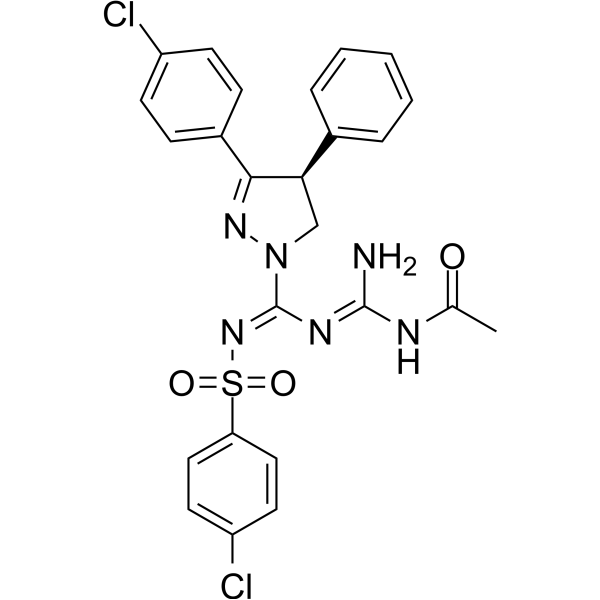 0 ImagesCat. No.: HY-155967CAS No.: 2711012-08-5
-
MDA7
 0 ImagesCat. No.: HY-173083CAS No.: 1103840-28-3MDA7 is the selective agonist for cannabinoid receptor 2 with EC50 of 128 nM and 67.4 nM in human CB2 receptor and rat CB2 receptor. MDA7 exhibits good affinity to human CB2 receptor and rat CB2 receptor with Ki of 422 nM and 238 nM. MDA7 exhibits analgesic activity in rats models.
-
Cannabicitran
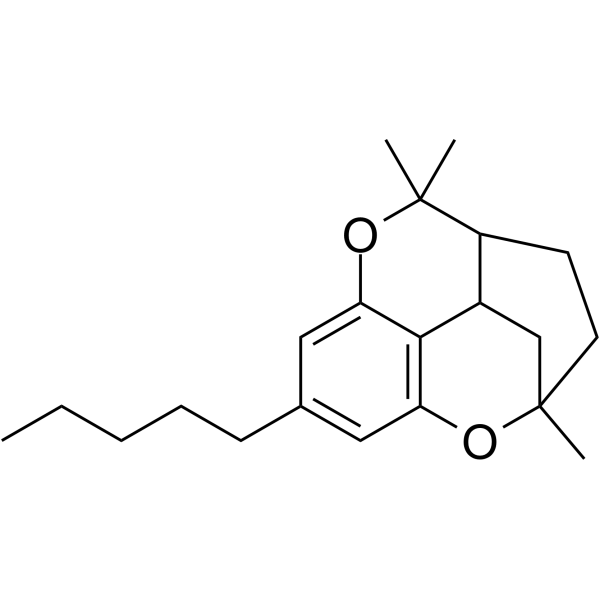 0 ImagesCat. No.: HY-118656CAS No.: 31508-71-1Cannabicitran is a cannabinoid. Cannabicitran can decrease intraocular pressure in rabbits.
-
CE-178253 benzenesulfonate
 0 ImagesCat. No.: HY-169820CAS No.: 956246-95-0CE-178253 benzenesulfonate is a CB1 antagonist with central nervous system activity.
-
MN-25
 0 ImagesCat. No.: HY-124954CAS No.: 501926-82-5MN-25 (compound 4a) is an orally active indolpyridone that serves as a novel cannabinoid ligand. MN-25 has Ki of 245 nM and 11 nM for CB1 and CB2. MN-25 has CB2 agonist activity and inhibits TNF-R release in human peripheral blood mononuclear cells in vitro with an IC50 of 33 μM. MN-25 shows efficacy in a mouse acute inflammation model at oral doses up to 50 mg/kg>[1].
-
TRPM8 antagonist 4 prodrug
 0 ImagesCat. No.: HY-174846TRPM8 antagonist 4 prodrug (Compound 8b) is an orally active CB2R agonist (EC50: 51.2 nM) and a weak TRPM8 antagonist. TRPM8 antagonist 4 prodrug is a prodrug of TRPM8 antagonist 4 (HY-174825). TRPM8 antagonist 4 prodrug exhibits anti-inflammatory and analgesic activities and can be used in the research of inflammation-related pain disorders.
-
L-759656
 0 ImagesCat. No.: HY-110041CAS No.: 174627-56-6L-759656 is a selective cannabinoid CB2 receptor agonist, with the Ki of 11.8 nM for the human CB2 receptor. L-759656 potently inhibits Forskolin (HY-15371)-stimulated cyclic AMP production in Chinese Hamster Ovary (CHO) cells, with an EC50 of 3.1 nM. L-759656 can be used for the study of immune-related diseases and inflammatory diseases.
-
Olivetol-d9
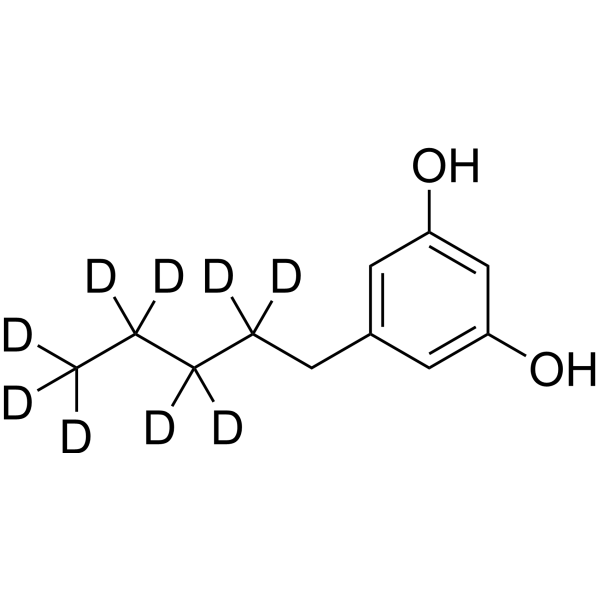 0 ImagesCat. No.: HY-W008364S1CAS No.: 137125-92-9
-
CB1/2 receptor-1
 0 ImagesCat. No.: HY-164817CAS No.: 1260669-31-5CB1/2 receptor-1 (compound 5.3) is a CB1/2 receptor agonist. CB1/2 receptor-1 can be used in angiogenesis research.




